Trezor Login – Secure Entry into the World of Cryptocurrency
Learn how to log in to your Trezor wallet safely, protect your digital assets, and experience unmatched hardware-level security.
🔐 Understanding Trezor Login
The Trezor login process is designed with one core goal — maximum crypto security. Unlike traditional web logins, Trezor doesn’t rely on passwords stored online. Instead, it uses hardware verification to confirm your identity. This means even if a hacker gains access to your computer, they cannot steal your private keys or approve transactions without physical confirmation on your Trezor device.
Trezor’s login is an integral feature of its ecosystem — connecting your device with the Trezor Suite app or supported platforms while keeping your assets safe from phishing and malware attacks.
🧭 Key Benefits of Trezor Login
- ✅ Hardware-Based Authentication – Approve every action physically on your device.
- ✅ No Password Storage – Eliminates the risk of compromised online credentials.
- ✅ Enhanced Privacy – Keeps your sensitive data offline and within your control.
- ✅ Open-Source Transparency – Every line of Trezor’s code is publicly auditable.
- ✅ Multi-Asset Management – Manage Bitcoin, Ethereum, and hundreds of tokens in one place.
🚀 Step-by-Step: How to Log In with Trezor
Step 1: Connect Your Trezor
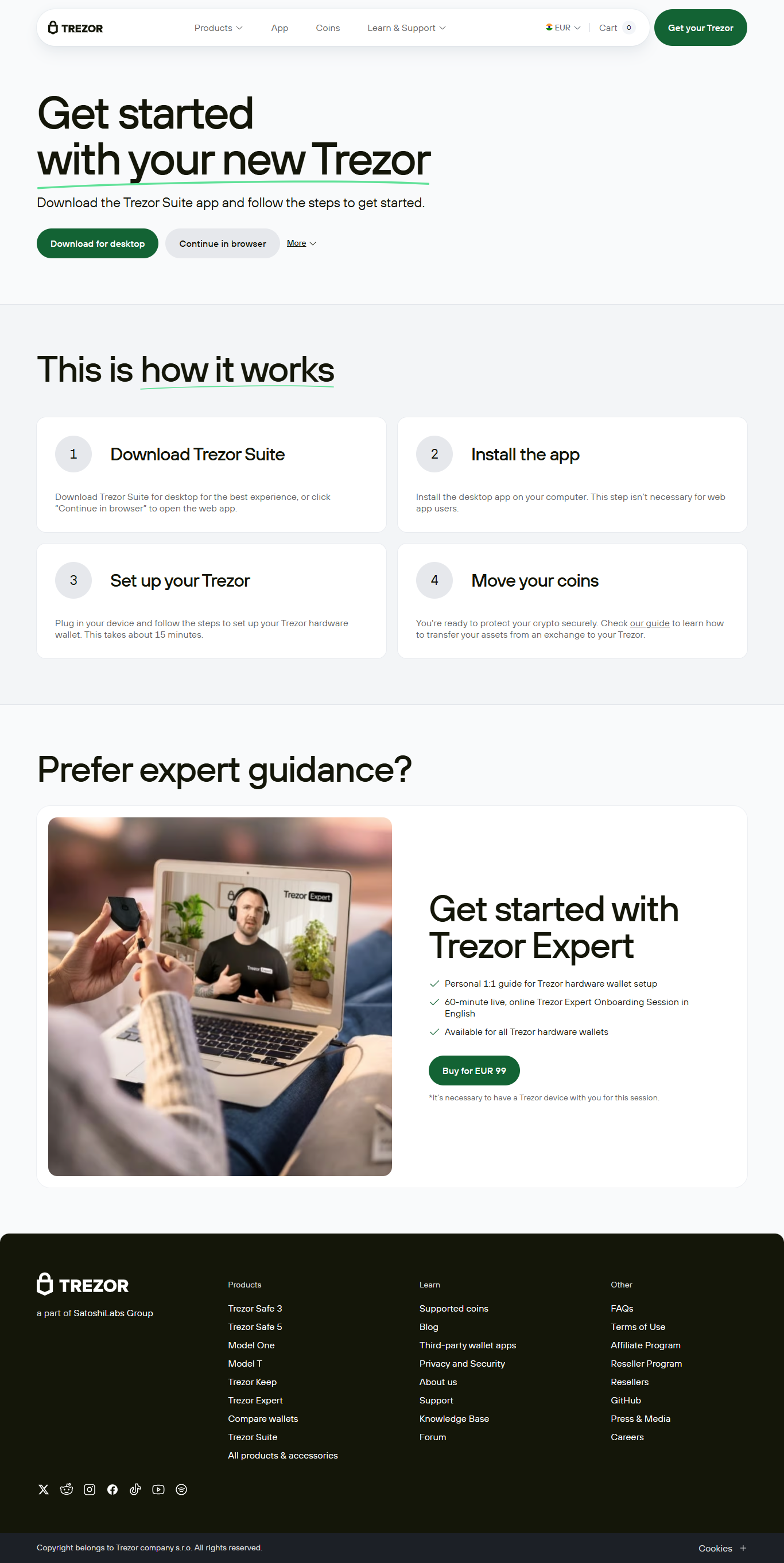
Plug your Trezor Model One or Trezor Model T into your computer using the original USB cable. Ensure you’re using a trusted computer with Trezor Bridge installed for seamless detection.
Step 2: Open Trezor Suite
Launch Trezor Suite, the official desktop application. Once the app detects your device, select “Connect Wallet” to start the login flow.
Step 3: Enter Your PIN
You’ll be prompted to enter your PIN using a scrambled number grid. This layout changes every time to prevent keylogging or visual attacks. Confirm the PIN using your Trezor’s display.
Step 4: Optional Passphrase
For advanced security, you can use a passphrase—a custom word or phrase that adds a hidden layer of encryption to your wallet. It acts as a “vault within a vault.”
Step 5: Access Your Wallet
After verification, your wallet dashboard opens, showing balances, transaction history, and portfolio overview. All sensitive operations require your device’s approval.
💡 Security Architecture of Trezor Login
At its core, Trezor Login uses a concept called Zero Knowledge Authentication. The private keys never leave your hardware wallet; instead, cryptographic signatures confirm ownership. This eliminates risks associated with centralized data breaches or phishing.
Even during login, the information passed to the connected app is non-sensitive and signed for verification. The result is a login experience that’s as simple as connecting your device — but infinitely more secure.
📊 Trezor Login vs Traditional Crypto Logins
| Feature | Trezor Login | Web/Software Login |
|---|---|---|
| Authentication | Hardware confirmation via device | Password or email-based |
| Private Key Storage | Offline (device memory) | Online (server or local file) |
| Malware Protection | Immune to PC viruses | Susceptible to phishing/keyloggers |
| Ease of Use | Requires device connection | Quick but less secure |
🧠 Expert Tip: Use Hidden Wallets
You can create multiple hidden wallets using unique passphrases. Each passphrase generates a new wallet structure, making it nearly impossible for anyone to detect your true holdings—even if your device is stolen.
🛠️ Troubleshooting Trezor Login Issues
Device Not Detected?
Reinstall the Trezor Bridge software and try using a different USB port or cable. Avoid connecting through USB hubs.
PIN Entry Doesn’t Work?
Ensure you’re matching the grid correctly. After several failed attempts, the device adds a delay to prevent brute-force attacks.
Forgot Your Passphrase?
Unfortunately, there’s no recovery for lost passphrases. Always note it down securely offline—preferably using a metal backup plate.
💬 Frequently Asked Questions
1. Can I access my Trezor wallet from another computer?
Yes, as long as you have your Trezor device and install Trezor Suite or use a supported browser. No wallet data is stored locally, ensuring privacy across devices.
2. Is Trezor Login compatible with MetaMask?
Absolutely. Through Trezor Connect, you can access DeFi apps on MetaMask while keeping your keys inside your Trezor.
3. What happens if my Trezor is lost or damaged?
You can restore access using your 12- or 24-word recovery seed on a new Trezor or any BIP39-compatible wallet.
🔒 Final Thoughts on Trezor Login
The Trezor login process redefines what it means to be secure in the digital age. With offline key management, verifiable transactions, and full user control, Trezor empowers crypto holders to truly own their assets. If security, transparency, and freedom matter to you—then Trezor is your safest login to the blockchain world.